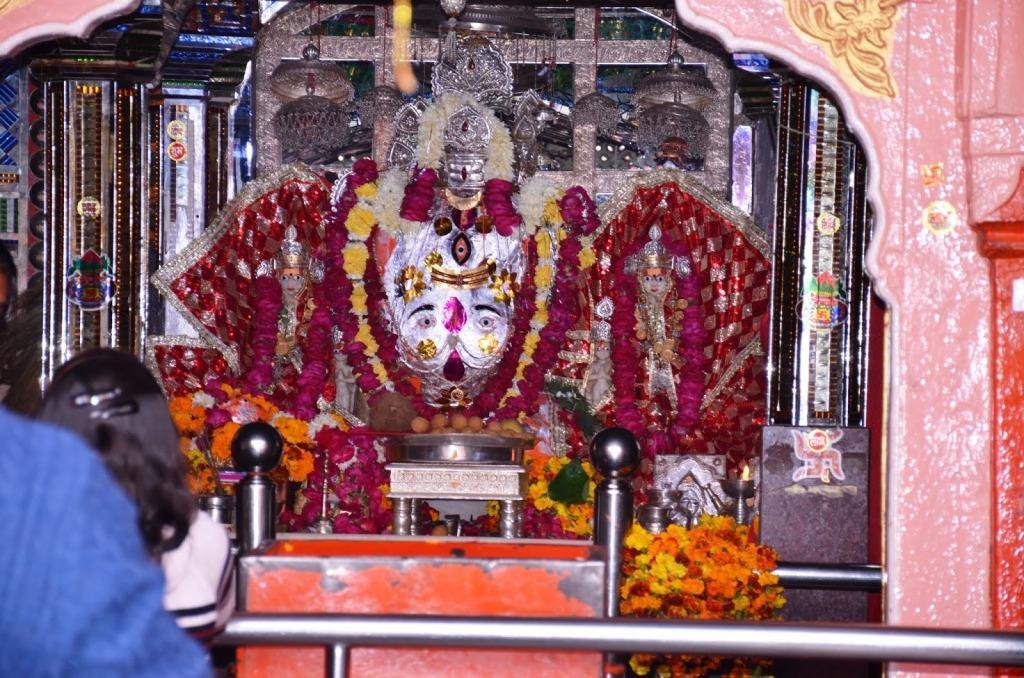
An old shrine in an old fort
The Trinetra Ganesh Temple is one of the oldest Ganesha temples in Rajasthan, built largely out of the red Karauli stone that the fort itself is made of. It stands on the plateau at the top of the Ranthambore Fort hill, so you arrive at it after the climb, not before it.
The thing that brings people specifically here is the idol. It shows Ganesha with three eyes, and the name Trinetra simply means three-eyed. It is an unusual form of the deity in Rajasthani temple art, and most visitors who have seen Ganesha idols elsewhere in India find it worth the journey on its own.
Local tradition holds that the Chauhan rulers who built the fort were devotees of this shrine, and that the temple's fortunes moved with the fortunes of the fort. It stayed in use through the sieges, the Mughal period and the Kachwaha dynasty, and it is still a working shrine rather than a preserved monument. Somebody lives there. Somebody lights the lamp. The scooter parked beside the entrance says as much as any guidebook.
Why people come
- A rare three-eyed Ganesha idol, and one of the oldest Ganesha temples in the state
- Set inside a UNESCO World Heritage hill fort, which is a walk in itself
- Fits naturally into the same day as a morning safari — no extra trip needed
- Views over the forest and Padam Talao from the courtyard and the fort walls
- A live place of worship, not just a monument, and open throughout the safari season
Plan the visit around your safari
Temple and fort share the same route, so the sensible thing is to do them together in one visit rather than trying to come back. Tell us when you book and we will place the stop at the start of your morning slot, before the fort fills up and before the heat. If you are on an afternoon slot, the same thing works in reverse — the fort and temple at the start of the drive.
Timings and entry
| Detail | Information |
|---|---|
| Season | 1 October to 30 June, following the park |
| Daily hours | Approximately 6:00 AM to 8:00 PM |
| Best time | Start of the morning safari slot |
| Entry | Arranged through your safari permit |
| Busiest day | Tuesday, Ganesha’s day |
Getting there
About 13 km from Sawai Madhopur town, on the road to the park, and only accessible from inside the national park. From outside, your options are Sawai Madhopur Junction on the Delhi–Kota line, roughly 13 km away, or Jaipur Airport about 180 km out. We arrange the local transfer either way.
Before you climb
- Shoes with grip. Around 700 uneven stone steps from the base of the hill. Open sandals are a mistake.
- Water. There is nothing reliable at the top, and the plateau is exposed.
- Original photo ID for every traveller, carried at the check-post.
- Cover shoulders and knees. It is a working shrine and the standard still applies.
- Ask before you photograph. Photography is fine, but not during a puja and not of worshippers at close range.
- Leave your shoes outside where indicated, and keep socks on if the stone is hot.